

Ganoderma lucidum (Reishi) is a wood-growing mushroom whose widespread use for medicinal purposes has, in recent decades, expanded from the Far East, where it has been valued for centuries. Before it could be cultivated artificially, its rarity in nature made it highly prized and reserved exclusively for members of royal courts, who were said to pay for it in gold. Owing to its remarkable healing properties, it earned the name “The Mushroom of Immortality” and continues to hold a prominent place in traditional Chinese medicine. It is especially valued for its anti-stress effects, the presence of bioactive compounds with potential antitumor properties, its ability to support the immune system, lower cholesterol levels, alleviate allergies and bronchitis, and soothe the stomach.
Due to its tough consistency, Reishi is classified as inedible and is not suitable for direct consumption. However, it is particularly well suited for preparing a strengthening tea that preserves the medicinal properties described above. It is also used in the production of medicinal products and dietary supplements.
Beyond its therapeutic qualities, glossy Ganoderma is an exceptionally attractive mushroom. Its firm structure makes it less sensitive to environmental conditions than softer mushroom species. In nature, it grows mainly on hardwood stumps in regions with a mild climate, yet it is extremely rare. For this reason, foraging is time-consuming, often unsuccessful, and may threaten its survival in the wild.
Cultivation offers a sustainable alternative to wild harvesting. For several decades, reishi has been successfully grown using mushroom cultivation kits or prepared substrates in glass jars. Today, such kits and mycelium for various mushroom species can also be purchased online, making this highly valued mushroom accessible to home growers and enthusiasts.
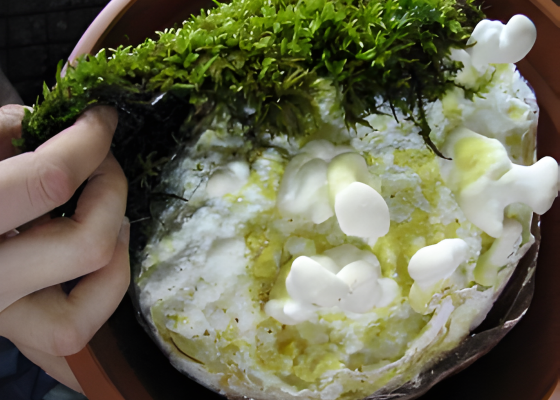
Mushroom growing kits are now widespread around the world and form the basis of large-scale production of this mushroom species, intended for end users in the form of medicinal teas and various preparations. With mushroom growing kits, reishi mushrooms can also be cultivated for purely aesthetic purposes, in a so-called “bonsai” style. To do this, the growing kit is placed in a larger flower pot, the top of the bag covering the substrate is removed, and then it is covered with fresh, rinsed moss.
(Image 1. Covering the reishi mushroom growing kit with rinsed, moist moss).
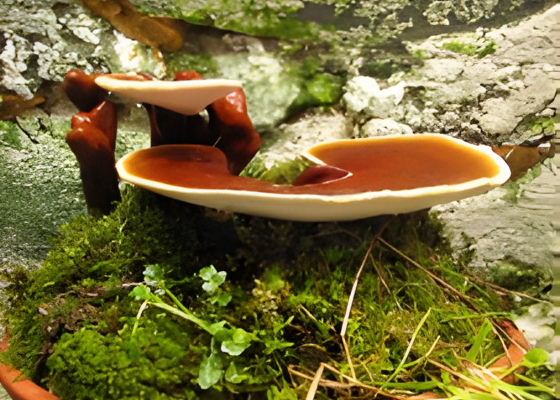
(Image 2. “Bonsai” Reishi a few months after planting).
If a suitable space is not available during the winter, the kits can be stored in a slightly humid area at around 10 °C. Watering and misting should resume once temperatures rise.
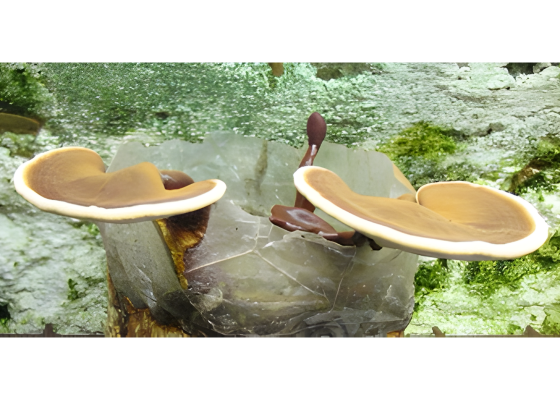
To grow a larger number of mushrooms as easily as possible, remove the top of the bag covering the substrate and place the kits in a warmer area with high relative humidity and gentle lighting.
(Image 3. Mushrooms emerge from the kit once the top of the bag has been removed.)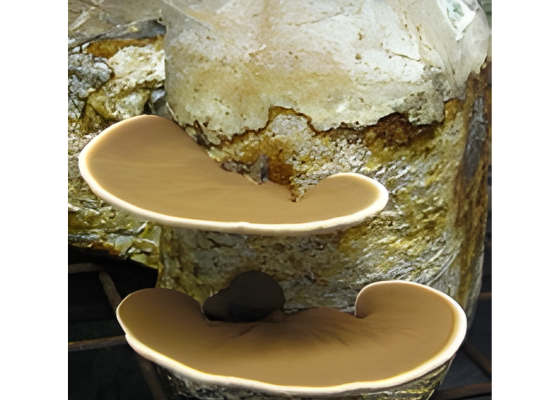
Mushrooms grown this way can be harvested, dried, and ground to make a strengthening tea, or they can be left to dry naturally and serve as a decorative element in a room.
Another option is not to cut the bag at all, but instead make a few cross-shaped slits on the side where it touches the substrate. The mushrooms will then begin to grow through these slits.
(Image 4. Fruiting through the holes in the bag).
Another method of cultivation is more suitable for purely decorative purposes due to the smaller yield. Place a jar containing substrate overgrown with mycelium in a lightly lit area, and soon primordia will begin to emerge from the substrate.
(Image 5. The simplest method of cultivation – substrate in a jar).


